|
Worldwide Guide to Women in Leadership
WOMEN
IN POSITIONS
OF INFLUENCE
IN DENMARK
-
throughout the ages
|
|
1095-1103 Joint Reigning Queen Bodil |
|
Contemporary sources depict her as the co-ruler of her husband, King
Erik I Ejegod. She was daughter of the Thurgot, Earl in Jutland, and
her nephew, Asser, became the first Archbishop Denmark. In 1103 they
went on a pilgrimage to Jerusalem. Erik died on the way and she did in
Jerusalem in 1103 or 1104. |
|

|
1259-66 Regent Dowager Queen Margrethe Sambiria Sprænghest
1266-81 Lady of Estonia and Virland |
|
Born as a Pommerian Princess, she was regent for her son Erik 5.
Klipping after the death of her husband, Kristoffer I. She fought
against the powerful Archbishop Jakob Erlandsen. In 1261 she and her
son were taken prisoner in Germany. The next year she returned
together with Albrecht of Braunshweig and Erlandsen left the country.
She managed to persuade Pope to accept the idea of female succession
to the Danish throne, though not to her daughters having
succession-rights before male relatives in other lines. Estonia was
her dowry which she controlled from Lolland-Falster another Dowry in
the South of Denmark. She lived circa
(1230-81). |
|
 |
1286-92 Regent Dowager Queen Agnes af Brandenburg
1286 Royal County Sheriff of Lolland-Falster Len |
|
Regent for Erik IV after her husband, Erik V was assassinated. Lolland-Falster
was her dowry, which she administered as a royal fief, being in charge
of aspects of the local administration. She later married Count
Gerhard II of Holsten and became mother of another son, Johann, and
died 1304. |
|

|
1340-74 Politically Influential Queen Consort Helvig von
Slesvig |
|
By
her marriage to Valdemar IV Atterdag (1340-75), her father gave her
1/4 of Jutland as dowry that he had in security for loans to the
Danish kings and other royals who had engaged in a long civil war.
Most of the country was in the hands of the Holstein Counts, but her
dowry was a contributing factor to the fact that her husband managed
to win back all the territory - giving him his by-name "Day again".
Helvig must have acted as regent during her husband's many journeys
abroad, but she also seems to have ended her days in a convent. She
was the mother of Margrethe I of Denmark, and died (circa 1374). |
|
 |
1376-87 Regent Dowager Queen Margrethe I Valdemarsdatter of
Denmark and Norway
1387-1412 Reigning Queen (Husband and Mistress) of Denmark,
Sweden and Norway |
|
Youngest daughter of King Valdemar IV of Denmark. At the age
of ten she was married to King Håkon VI of Norway, son of Magnus II of
Sweden and Norway. Their son Olaf, born in 1370, was elected King Olaf
II of Denmark in 1375 at the death of Margrethe's father, with her as
regent. After her husband's death shortly after her son also became
Olaf IV of Norway. After Olaf's death in 1387 the Estates in Denmark
elected her as Full-mighty Husband and Mistress for life. The
following year she became regent of Norway. In 1388 the Swedish
nobility dethroned their king Albrecht of Mecklenburg, and elected
Margrethe as their reigning Queen instead. She chose her sister's
daughter's son Erik of Pommerania as her successor, who became king in
1389, but Margrethe remained the real ruler. She founded the union of
Kalmar, which in the case of Sweden would last until 1523, and with
Norway until 1814. In 1410, Margrethe tried to reinstate Danish
overlordship over Schleswig, which caused a war with the Counts in
Holstein. She travelled to the conflict area, and died there in 1412.
She lived (1353-1412). |
|
 |
1420 De-facto Regent Queen Philippa of England of Sweden
1423-25 Regent of Denmark |
|
Had big parts of Sweden as her dowry and she acted as her husband's
representative in the country. During his stay abroad from 1423 she
was regent in Denmark, and in 1428 she successfully organized the
defence of Copenhagen against the attacking German Hanes (North-German
City States). She lived (1394-1430) |
|
 |
1448 "Holder of the Royal Authority" Dowager Queen Dorothea zu
Brandenburg in Denmark
1448-52 Mistress of Örebro, Närke and Värmland (Sweden)
1481-90 Regent of Slesvig-Holsten (Schleswig Holstein) |
|
The
"royal authority" was vested in her after the death of her first
husband, Christoffer 3 of Bayern. She contra signed and authorized the
decisions made by the Council of State, which reigned the country.
Later same year she married the new king Christian I of Oldenborg and
often acted as regent during his many warfares. She also had
Abrahamstrup, Kalundborg, Lolland-Falster Slesvig and Holsten, Närke
and Värmland (Sweden) as security for loans she granted her husband. A
month before his death, Christian granted her Slesvig-Holsten as a
personal fief, and after his death she acted as regent for son,
Frederik, (later king) in the Dukedoms.
She lived
(1430-90). |
|
 |
1518-23 De-facto In charge of the Customs Sigbrit Villoms
1519-23 "Second in Command" in Denmark
1522-23 De-facto Leader of the Treasury |
|
Generally known as Mor Sigbrit, she was a Dutch tradeswoman who moved
Norway and managed a trading company in Bergen of a substantial size.
Her daughter, Dyveke, became mistress of the later Christian 2 of
Denmark around 1509. When became king in 1513 they moved with him to
Copenhagen and Sigbrit's influence grew. Dyveke died suddenly in 1517
- rumoured to have been poisoned. Queen Elisabeth von Habsburg
appointed her as her Chief of Court and she also acted as midwife of
the king's children. Her brother was a pharmacist and she was
knowledgeable about medicine. She was also left in charge of the
government when Christian was abroad. 1522 she was given a so-called
"General receipt" (generalkvittering), that made her de-facto a kind
of Minister of Finance. When the king was deposed in 1523 for his
dictatorial rule, she went with the family to the Netherlands where
they tried to gain support for the king's return. One of the
conditions was that Christian had to part with her. From then on,
nothing is heard of her, though the story of an old woman in prison
accused of heresy or witchcraft sounds like it could have been her.
Sigbrit Willoms also wrote her surname as Villumsdatter and she (d.
circa 1532). |
|
 |
1588-94 Regent
Queen Dowager Sophie von Mecklenburg-Schwerin of
Schleswig-Holstein (Slesvig-Holsten) (Denmark and Germany)
1588-1631 Royal County Sheriff of Lolland-Falster Len and
Ravnsborg Len |
|
Widow of Frederik 2., she was regent for son Christian 4. in
Slesvig-Holsten 1588-94. She was engaged in a power struggle with the
Regents of Denmark, The Council of State, which had Christian declared
of age in 1593, but she did not give up her position in the Duchies
before the following year. She then withdrew to Lolland-Faster, where
she managed her estates extremely well and became very rich and she
lend her son a lot of money for his warfares.
She lived
(1557-1631). |
|
 |
1560-90 Christine, Titular Queen of Denmark, Sweden and Norway, The
Wends, Goths and Slavs, Duchess of Schleswig-Holstein, Ditmasken,
Lorraine, Bar and Milano, Countess of Oldenborg and Balomnt, Lady of
Tortana |
|
1545-59 Regent in Lorraine for son Duke Karl II (1545-1608). 1560 She
took over the claims as successor of their father, Christian II (d.
1559), from her sister, Countess Palatine Dorothea, who had no
children. Christine lived (circa 1521-90) |
|

|
1702-08 Regent Dowager Duchess Hedvig Sofia of Sweden of
Holstein-Gottorp |
|
Married to Friedrich von Holstein-Gottorp (1671-1702) in 1698. She
stayed in Gottorp for about one year and in 1700 her only child, Karl
Friedrich (1700-39), was born, and two years later her husband was
killed in battle. She was proclaimed regent while the guardianship was
given to her brother, Karl. XII. She was Hereditary Princess of
Sweden until her death, and her son stayed in Sweden until 1718, and
was generally considered to be heir to the throne - instead his aunt,
Ulrika Eleonora the Younger, was chosen as reigning Queen, after the
death of her brother, Karl XII. Karl Friedrich's son Carl Peter Ulrich
later became Czar Peter of Russia. Hedvig Sofia was daughter of Karl
XI and Ulrika Eleonora the Older, and lived (1681-1708) |
|
 |
1703-11 Postmistress General Dorothea Kragh |
|
In
1694 she married the 63 year old gehejmestatsminister and chief of the
Admiralty, baron Jens Juel til Juelinge (d. 1700). Her second husband
was Count Christian Gyldenløve of Samsø. She followed him to Italy,
where he was in command of a battalion, and gave birth to their first
son, Christian Danneskiold-Samsøe. The second son, Frederik, was born
in 1703, four month's after Christian's death. Already while pregnant
she negotiated with Frederik 4. about taking over the income from the
Danish postal service, which her husband had had since 1689. She was
appointed Generalpostmester, and much to the surprise of most people,
she took over the management herself with the help of a number of
representatives. 1705 she made new and detailed instructions to the
local postmasters, and when her contract ended in 1711 the post
service was a good business with a surplus. In 1715 she married,
gehejme-councillor, Count
Hans Adolf Ahlefeldt, and lived (1675-1754). |
|
 |
1708-09 Regent Queen Louise von Mecklenburg-Güstow of
Denmark and Norway |
|
In charge of the government during her husband, Frederik 4's journey to Italy. She had
been married the later king since 1695. Her husband was first married
to the "left hand" with Elisabeth Helene von Vieregg and after her
death to Comtesse Anna Sophie Reventlow. The Queen became more and
more engaged in her pietistic faith. She was mother of two surviving
children and three other children who all died as infants, and lived
(1667-1721). |
|
 |
1772-84 De-facto
Head of the Government Juliane-Marie af Danmark og Norge |
|
Together with her
son, Hereditry Prince Arveprins Ferdinand and Conseil President Høegh-Guldberg
she deposed the former de-facto leader, the private doctor of the
King, Friederich Struense, and was part of the triumvirate that had
the power in the name of king Christian
7, who was menally ill. She was born as Princss of Braunschweig-Wolfenbüttel.
Her sister, Therese Natalie, was Princess-Abbess of Gandersheim 1766-77
and her sister-in-law, Grand Duchess Anna Pavlovna was regent in
Russia
1740-41 for her oldest son, Zar Ivan and after she and the son had
been executed her younger children lived in exile in Denmark. Juliane-Marie
lived
(1729-96) |
|
 |
1814-15 Regent
Queen Marie Sofie Frederikke af Danmark og Norge |
|
Regent while her husband, Frederik 6, took part in the Congress of
Vienna. She was born as Princess of Hessen-Kassel, gave birth to
around 10 children of which only 2 daughters survived. She lived
(1767-1852). |
|
 |
1850-63 Politically Influential Countess Louise Danner |
|
Louise Christine Rasmussen was a former ballet-dancer and later owner
of a fashion-boutique. She had been the mistress of then Crown-Prince
Frederik's best friend, Carl Berling, with whom she had a child. After
Frederik 7. (1808-48-63) Succeeded to the throne, she moved into the
royal palace and the couple married two years later. She was very
influential during the reign of her husband, who had a very difficult
personality, and divorced his two first royal wifes. Louise was
granted the title Lensgrevinde Danner (Fief-Countess) and lived
(1815-74). |
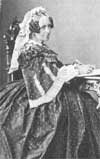 |
Until
1851 Heiresss Presumptive H.H. Princess Charlotte of Denmark |
|
Daughter of Hereditary Prince Frederik of Denmark and Sophie Frederikke. Married to
Landgraf Wilhelm of Hessen-Kassel. By the version of semi-Salic law established in the Lex Regia in
1665, she had the best claims to the Danish throne, and to the Duchy of
Schleswig, but the Duchy of Holstein did not allow female succession and
the Danes found it imperative that the two duchies remained united and
part of the Danish realm. Therefore a male heir had to be found. She was a vise and worldly Lady, who felt
totally Danish, just like her
husband, who was in military service in his youth. She was very aware of her
dynastic rights and 1851 both she, her son transferred their succession-rights
to her daughter, Louise who then transferred it to her husband - Christian of
Slesvig-Holsten-Sønderborg-Glücksborg by an
Act of Acceptance and Assurance. She lived (1789-1864)
|
|

|
1924-25 Minister of Education mag.art Nina Bang
|
|
The
first female Minister in the world, she was member of the City Council
of Copenhagen 1913-17, Member of Landstinget (Upper Chamber) 1918-28, as
one of the first three women. Nina Henriette Wendeline Bang née Ellinger
was a historian and journalist, married to Jens Gustav Bang (1871-1915),
and her only daughter was born 1903. She lived (1866-1928). |
|
 |
1950-53 Chairperson of the Landsting Ingeborg Hansen |
|
The
world's second female parliamentary speaker, she was for a number of
years Chair of the Finance Committee, 1945-50 Secretary of Landstinget
before becoming the last Chairperson of the Upper House before the
Danish Parliament became an uniCámaral Legislature. She lived
(1886-1954). |
|

|
1965-
Temporary Rigsforstander HRH Princess Benedikte of Danmark |
|
Became a member of the Council of State by the age of 21 and has acted
as regent (Rigsforstander) first in the place of her father and then for
her sister, Queen Margrethe 2, whey they were abroad - alternating with
Crown Prince Frederik and Prince Joachim of Denmark, since they came of
age. Princess Benedikte was married to HH Prince Richard zu Sayn-
Wittgenstein-Berleburg (1934-2017). Mother of 3 children.
(b. 1944-) |
|
 |
1972- Queen
Margrethe the Second |
|
Succeeded Frederik 9. Mother of two sons. (b. 1940-)
|
|

|
1972-2000
Temporary Rigsforstander HM Queen Ingrid |
|
As
the first Dowager Queen ever she became member of the Council of State
and able to act as regent when her daughter, Queen Margrethe was abroad.
After her grand-children Crown Prince Frederik and Prince Joachim came
of age, she was not regent so often, but she continued to act as regent
when both her two daughters and the princes were abroad. Queen Ingrid
was born as Princess of Sweden and married Crown Prince Frederik in
1935. He was king (1947-72).
She lived (1910-2000) |
|

|
1993-96 Deputy Prime Minister Mimi Jakobsen |
|
MP
since 1977, Deputy Chairperson of the Parliamentary Group 1980-81,
Political Spokesperson 1981-82, 1988-92 and since 1998 of the Centrums
Demokraterne, 1982-84 Minister of Cultural Affairs, 1986-88 of Social
Affairs and in 1987 for Greenland, 1993-94 1. Vice-Premier and Minister
for Coordination of Business-Policy, 1994 Minister of Industry,
1994-96 2. Vice-Premier and Minister of Business and Industry. From 1989
also Chairperson of CD. Two sons born 1981 and 1989. (b. 1948-). |
|

|
1993-2001
Deputy Prime Minister
Marianne Bruus Jelved |
|
In
1982-85 Deputy Mayor of Gundsø, since 1987 MP, 1987-93 Chairperson of
the Parliamentary Group, Leader of Det Radikale Venstre 1990-2007,
Minister of Economic Affairs since 1993, 2. Vice-Premier 1993-94, and
from 1994 1. Vice-Premier and also Minister of Nordic Co-operation. (b.
1944-). |
|

|
1995-2011
Commissioner of Police Hanne Bech Hansen |
|
Deputy Chief Prosecutor of Fyn 1981-84 and Acting Prosecutor 1982-83,
Deputy Commissioner of Police of Gentofte 1984-86, Commissioner by the
National Commissioner of Police 1986, Leader of the Intelligence Service
of the Police (Chef for PET) 1988-93, Chief Prosecutor of Copenhagen,
Frederiksberg and Tårnby 1993-95, Commissioner of Police of Copenhagen (Københavns
Politidirektør) 1995-2009.
She lived (1939-2016). |
|

|
1995-2005 Chairperson and Governor of the National Bank Bodil Nyboe Andersen |
|
Governor in the National Bank since 1990. From 1995 also Governor in the
International Monetary Fondation. A director in the Andelsbank 1981-90
and Director in Unibank and Unidanmark 1990. From 2004 Chairperson of
the Board of Copenhagen University and from 2005 President of Danish Red
Cross. (b.
1940-). |
|
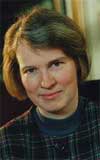 |
2000-01 Minister of Finance Pia Gjellerup |
|
1987-2007 MF, 1990-93 Chairperson of the Taxation Committee, 1991-93
from 2001 Secretary of the Parliamentary Group, 1993 Minister of
Justice and Police, 1994-98 and 2002-05 Chairperson of the
Parliamentary Group of SD, 1991-93 Secretary of The Folketing,
1993-98 Deputy Chairperson of the Finance Committee and 1998-2000
Minister of Business and Industry. (b. 1960-). |
|
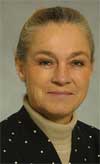 |
2006-10 Lord Mayor of Copenhagen Ritt
Bjerregaard |
|
MF
1971-95 and 2001-2005,
1973 and 1975-78 Minister of Education,
1979-82 Minister of Social Affairs,
1995-99 European Union Commissioner for Environment and Atomic
Security and
2000-01 Minister of Food, Agriculture and Fisheries.
Chairperson 1982 and
1987-91 and 1982-87 Vice-Chairperson of the Parliamentary Group of the
Social Democrats, Chairperson of the Parliamentary State Auditors
1990-94, Vice-President of the Parliamentary Assembly of the
Conference for Security and Co-operation in Europe 1992-94. Jytte Ritt Bjerregaard is married to the historian Søren
Mørch, no children. (b. 1941-) |
|
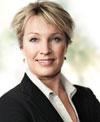 |
2008-19 Deputy Prime Minister Lene Espersen
2010-11 Minister of Foreign Affairs |
|
MF
since 1994, Political Spokesperson of The Conservative People's
1999-2001, Minister of Justice 2001-08 and Political Leader from
2008 and also Deputy Prime Minister and and 2008-10
Minister of Economic Affairs and
Business
Affairs. (b. 1965-)
|
|
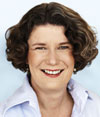 |
2010-11 Minister of Defence Gitte Lillelund Bech |
|
MP for the Rightwing Liberals 1999-2013 and Chairperson of the Foreign
Affairs Committe 2006-10. Married to Thomas Egebo, Permanent
Secretary in the Ministry of Climate and Energy. (b. 1969-). |
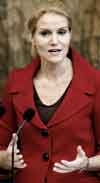 |
2011-15 Prime
Minister Helle Thorning-Schmidt |
file:///D:/My Web Sites/fotos/Thorning-Schmidt_H.jpg
|
Social Democrat Member of the European Parliament
1999-2004 and Member of the Parliament, Party Chairperson from 2005
and Chairperson of the European Council, the rotating presidency of
the European Union. Became Vice-Chairperson of
the Folketing in 2015. Married to Stephen Kinnock and mother of
two daughters. (b. 1966-) |
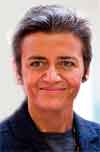 |
2011-14 Deputy Prime Minister Margrethe Vestager |
Also
Minister of Economic Affairs and Interior from 2011. 1993-97 Party Chairperson, Deputy Group
Chairperson 2001-07 and Group Chairperson and Party Leader of the
Social Liberals from 2007.
Minister of Education 1998-2001
and
Minister of Church Affairs
1998-2000.
EU Commissioner from 2014.
(b. 1968-) |
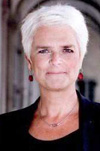 |
2012-13
Deputy Prime Minister
Annette Lilja
Vilhelmsen |
| She is Second Deputy
Premier and was Minister of Business Affairs and Growth
2012-13 and Minister of Social Affairs and Integration from 2013. 2001-11 Member of the
Municipal Council and among others 2. Deputy Mayor of Kerteminde
Byråd, MP from 2011. (b. 1959-). |
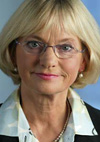 |
2015- Chairperson
of the Folketing Pia Kjærsgaard |
| MP
from 1984,
Group-Secretary 1984-87 and Political Spokesperson,
Deputy Party-Chairperson and Party Leader of Fremskridtspartiet 1985-94, Leader of Dansk Folkeparti 1995-2012
and Vice-Chair of the Folketing 2012-15.
(b. 1947-) |
Last update 17.03.17
|